How to Prevent Mold in Maryland Basements
Basements are the most mold-prone room in a Mid-Atlantic home. Here is how to keep yours dry, ventilated, and mold-free year-round.
If there is one room in a Maryland home most likely to develop mold, it is the basement. Below-grade spaces stay cool while the air above ground is warm and humid, and that temperature difference makes basement walls and floors a magnet for condensation. The good news is that basement mold is largely preventable with the right habits and a little equipment.
Why basements are so vulnerable
Mold needs moisture, and basements collect it from several sources:
- Groundwater seepage through foundation walls and floors
- Condensation when humid summer air meets cool concrete
- Plumbing leaks from water heaters, washing machines, and supply lines
- Poor drainage when gutters and downspouts let water pool against the foundation
- Inadequate ventilation that traps damp air
In Maryland's humid climate, the condensation problem is especially acute from June through September, when warm outdoor air flows into a cool basement and deposits moisture on every surface.
Control the water from outside
The first line of defense is keeping water away from the foundation:
- Clean gutters and downspouts regularly so they flow freely.
- Extend downspouts at least several feet from the foundation.
- Grade the soil around the home so it slopes away, not toward, the walls.
- Address any standing water in the yard after storms.
Water that pools against a foundation will eventually find its way in, and once it is inside a wall cavity it creates the steady dampness mold needs.
Manage indoor humidity
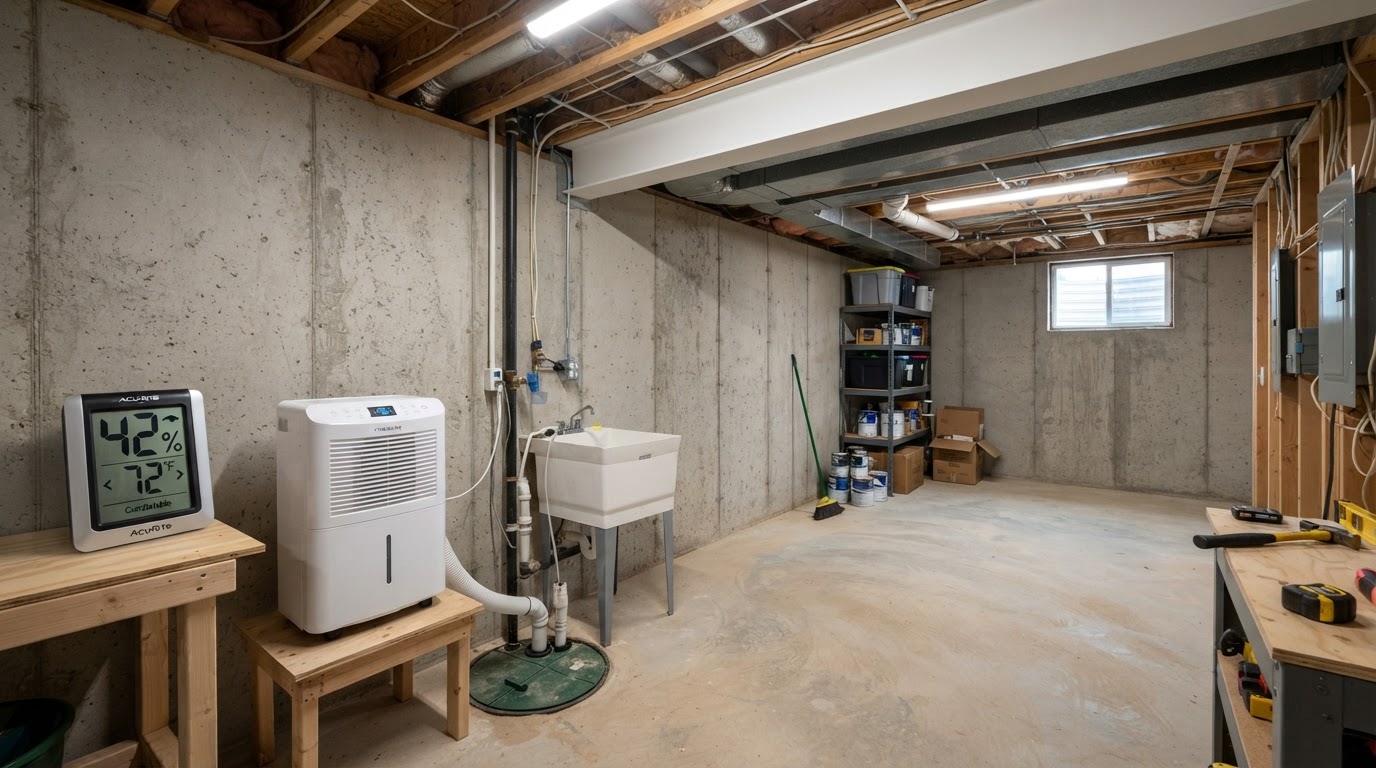
A dehumidifier is the single most effective tool for a Maryland basement. The goal is to keep relative humidity below 50%. A few tips:
- Size the dehumidifier to the basement's square footage.
- Choose a unit with a built-in hygrometer or pair it with a standalone one.
- Plumb it to a drain or pump so it runs continuously without needing to be emptied.
- Check and clean the filter regularly so it keeps working efficiently.
If humidity stays high even with a dehumidifier running, there may be a larger moisture source — a leak, seepage, or a vented crawl space connected to the basement — worth investigating.
Ventilate and circulate
Stagnant, damp air is mold-friendly air. Even a small amount of airflow helps:
- Leave interior doors open occasionally.
- Use a small fan to keep air moving in dead corners.
- If the basement has windows, open them on dry, low-humidity days.
- Make sure any dryer in the basement vents to the outside, not indoors.
Insulate to stop condensation
Insulating basement walls and pipes reduces the temperature difference that causes condensation. Insulated walls stay warmer, so humid air is less likely to deposit water on them. Pipe insulation prevents drips from cold water lines. Both are relatively inexpensive upgrades that pay off in mold prevention.
Watch for the warning signs
Catch problems early and they stay small:
- A persistent musty smell
- Discoloration on walls, floors, or stored items
- Condensation on windows, pipes, or walls
- Warped or buckling flooring
- Damp spots that never fully dry
Any of these is a reason to investigate further. A musty smell in particular almost always means mold is present somewhere, even if you cannot see it.
When to call a professional
If you have done the basics — dehumidifier, drainage, ventilation — and dampness or mustiness persists, a moisture inspection can locate the hidden source. Our featured local provider, MD Mold Testing, performs basement moisture assessments and mold testing across Maryland, Washington, D.C., Northern Virginia, and Delaware.
The bottom line
Basement mold is common in Maryland, but it is not inevitable. The combination of good exterior drainage, a properly sized dehumidifier, airflow, and insulation keeps most basements dry. When you cannot solve it on your own, a professional inspection tells you what is happening behind the surfaces.
This article is general educational information and is not professional advice.
Ready to talk to a professional?
Call our featured local provider, MD Mold Testing.