PCM Air Quality Testing in Maryland & the Greater D.C. Region
Phase contrast microscopy (PCM) air testing that counts airborne fibers — the standard method for confirming asbestos clearance after abatement or assessing airborne fiber levels.
What is pcm air quality testing?
PCM air quality testing uses phase contrast microscopy to count airborne fibers in a known volume of air. It is the standard method for assessing airborne fiber concentrations — most commonly used for asbestos clearance sampling after abatement, to confirm that airborne fiber levels have returned to normal before reoccupancy. PCM does not identify what type of fiber is present (asbestos vs. other fibers); it counts all fibers. For asbestos-specific identification, transmission electron microscopy (TEM) is used. MD Mold Testing provides PCM air quality testing throughout Maryland, Washington D.C., Northern Virginia, and Delaware.
PCM air quality testing is the measurement of airborne fiber concentrations using phase contrast microscopy. Air is drawn through a cassette containing a mixed cellulose ester filter by a calibrated pump at a known flow rate for a defined duration, collecting a known volume of air. The cassette is sent to an accredited laboratory, where the filter is prepared and examined under a phase contrast microscope. The microscopist counts the fibers visible in defined fields of view, and the result is reported as fibers per cubic centimeter (f/cc) of air. PCM counts all fibers — asbestos and non-asbestos alike — based on their physical dimensions (length, width, and aspect ratio). It is the standard method for asbestos clearance sampling because it provides a rapid, cost-effective count of airborne fibers. For identification of specific fiber types (distinguishing asbestos from other fibers), transmission electron microscopy (TEM) is the method of choice; PCM is the screening and clearance tool. The clearance criterion is typically compared against an action level defined by regulation or project specification. MD Mold Testing performs the sampling with calibrated equipment; the accredited lab performs the microscopy.
Why is pcm air quality testing important?
With a large stock of pre-1980s buildings across Baltimore, D.C., and the Maryland and Northern Virginia suburbs, asbestos abatement and renovation are common in the region. PCM clearance sampling is the standard verification step after asbestos abatement, confirming airborne fiber levels are acceptable before reoccupancy — a routine requirement for renovation and abatement projects in the Mid-Atlantic's older building stock.
After asbestos abatement, the question is not whether asbestos-containing materials were removed — it is whether the air is safe to breathe. Abatement uses containment, negative pressure, and HEPA filtration to prevent fiber release, but the only way to confirm the air is clear is to sample it and count the fibers. PCM is the standard clearance method because it provides a rapid, quantitative result: fibers per cubic centimeter, compared to an action level. Without clearance sampling, reoccupancy after abatement is based on assumption rather than evidence — and asbestos fibers, once inhaled, cannot be removed from the lungs. In the Mid-Atlantic, where asbestos abatement is a routine part of renovating the region's older building stock, PCM clearance is the standard, expected verification step. It is also used during renovation projects where suspect materials were disturbed, to confirm airborne fiber levels are acceptable. The PCM report is the documentation an abatement contractor, a property owner, an insurer, or a regulator needs to confirm the air is clear — not an opinion, but a lab-verified count of fibers in a known volume of air. For the health and safety of the people who will reoccupy the space, that documentation is the difference between a closed project and an open risk.
Featured Local Provider
Schedule pcm air quality testing with MD Mold Testing
Serving Baltimore, Rockville & Washington, D.C. and the greater Mid-Atlantic region.
Warning signs to watch for
- Asbestos abatement was recently completed and requires clearance
- You are renovating a pre-1980s building and need airborne fiber assessment
- An abatement contractor, insurer, or regulator requires clearance documentation
- You want to confirm airborne fiber levels after disturbance of suspect materials
- A property transaction requires documented clearance conditions
When should you schedule this service?
- Asbestos abatement was completed and clearance is required
- Renovation of a pre-1980s building disturbed suspect materials
- An insurer or regulator requires documented airborne fiber clearance
- You need to confirm airborne fiber levels before reoccupancy
What does professional testing involve?
Here's how MD Mold Testing typically approaches pcm air quality testing across Baltimore, Rockville & Washington, D.C..
Project & abatement review
We review the abatement scope, containment, and clearance criteria to plan representative sampling locations.
Air sampling
Calibrated pumps draw air through PCM cassettes for a defined volume and duration in the abated area and reference areas.
Laboratory analysis
An accredited lab analyzes the cassettes by phase contrast microscopy, counting fibers per field of view.
Clearance report
A report presents fiber concentrations against the applicable clearance criterion and documents whether the area is clear for reoccupancy.
PCM air sampling uses calibrated pumps and cassettes to collect a defined air volume, then an accredited lab counts fibers by phase contrast microscopy. Results are reported as fibers per cubic centimeter (f/cc) and compared to the applicable clearance level. Call MD Mold Testing at (301) 717-1454.
PCM air quality testing is appropriate after asbestos abatement for clearance verification, during renovation of pre-1980s buildings where suspect materials were disturbed, when an insurer or regulator requires documented clearance, and whenever airborne fiber concentrations need to be assessed.
What can testing results tell you?
The PCM report presents the airborne fiber concentration for each sample location in fibers per cubic centimeter (f/cc), compared to the applicable clearance criterion (often an action level defined by regulation or project specification). A clearance is typically achieved when fiber concentrations are at or below the action level in all sampled areas. If levels exceed the action level, the report identifies that and recommends further cleaning or continued containment before reoccupancy. The report also documents the sampling parameters (flow rate, duration, volume) and the lab's accreditation. It is important to understand that PCM counts all fibers, not just asbestos — so a PCM clearance confirms that total airborne fiber levels are acceptable, which is the standard post-abatement criterion. When asbestos-specific identification is required (confirming that no asbestos fibers remain), TEM analysis is the appropriate method and may be specified in addition to or instead of PCM. The report is environmental documentation of airborne fiber levels, not a medical assessment of exposure.
Featured Local Provider
Schedule pcm air quality testing with MD Mold Testing
Serving Baltimore, Rockville & Washington, D.C. and the greater Mid-Atlantic region.
The cost of PCM air quality testing depends on the number of sample locations, the duration of sampling, and the number of cassettes analyzed. A single-area clearance costs less than a multi-zone assessment of a large abatement project. Contact MD Mold Testing at (301) 717-1454 for a quote based on your project scope.
A common mistake is confusing PCM with asbestos bulk testing — PCM counts airborne fibers; bulk testing (PLM) identifies whether building materials contain asbestos. They answer different questions. Another is assuming PCM identifies asbestos specifically; it counts all fibers, so when asbestos-specific identification is required, TEM is the appropriate method. A third is skipping clearance sampling after abatement and reoccupying based on appearance alone; the only way to confirm the air is clear is to sample it. Finally, using uncalibrated equipment or an unaccredited lab undermines the defensibility of the results; professional sampling with calibrated pumps and an accredited lab is essential for results that will withstand scrutiny.
PCM air quality testing is not a DIY task. It requires calibrated sampling pumps, PCM cassettes, defined sampling protocols, and an accredited laboratory with the microscopy capability to count fibers. The results must be defensible for an abatement clearance, a regulatory requirement, or a property transaction — and consumer equipment cannot provide that. Professional sampling with calibrated equipment and an accredited lab is the only reliable path for PCM air quality testing.
Why pcm air quality testing matters in the Mid-Atlantic
Pre-1980s buildings across the region commonly contain asbestos; abatement and PCM clearance are routine for renovation projects.
Baltimore and D.C. have large stocks of older commercial and residential buildings where PCM clearance is a standard project requirement.
PCM clearance is the standard post-abatement verification method; TEM is used when asbestos-specific fiber identification is required.
A local, independent testing specialist
MD Mold Testing is our featured local provider for PCM air quality testing across Maryland, Washington D.C., Northern Virginia, and Delaware. They use calibrated sampling equipment and accredited lab analysis for defensible clearance results, and they understand the region's older building stock and the routine need for asbestos clearance sampling in renovation and abatement projects. They can also advise when TEM analysis is appropriate for asbestos-specific identification. Contact MD Mold Testing at (301) 717-1454 or visit https://www.mdmoldtesting.com/ to schedule PCM air quality testing.
Frequently asked questions about pcm air quality testing
What is PCM air quality testing?+
PCM (phase contrast microscopy) air testing counts airborne fibers in a known volume of air. It is the standard method for asbestos clearance sampling after abatement, confirming airborne fiber levels are acceptable before reoccupancy.
Does PCM identify asbestos specifically?+
No. PCM counts all fibers — asbestos and non-asbestos alike — based on their physical dimensions. For asbestos-specific identification, transmission electron microscopy (TEM) is the appropriate method. PCM is the standard screening and clearance tool.
When is PCM clearance sampling required?+
After asbestos abatement, to confirm the air is clear before reoccupancy. It is also used during renovation of pre-1980s buildings where suspect materials were disturbed, and when an insurer or regulator requires documented clearance.
How much does PCM air quality testing cost?+
Costs depend on the number of sample locations, sampling duration, and number of cassettes. Contact MD Mold Testing at (301) 717-1454 for a quote based on your project scope.
What is the difference between PCM and TEM?+
PCM counts all airborne fibers rapidly and cost-effectively — it is the standard clearance tool. TEM identifies specific fiber types, including asbestos, at much higher magnification — it is used when asbestos-specific identification is required.
How long until I get PCM results?+
PCM analysis is typically faster than TEM. Results usually return within a few business days, depending on the lab and the number of samples.
Related questions from our knowledge base
What does mold smell like?
Mold often produces a distinctive musty, earthy odor, sometimes described as smelling like wet socks or damp leaves. This smell comes from m
Read full answerWhat is mold testing and what does it actually involve?
Mold testing is the process of collecting air or surface samples from a home and having them analyzed by a laboratory to identify the types
Read full answerWhen should a Maryland homeowner consider mold testing?
Testing is worth considering after a water event like a roof leak, plumbing leak, or basement flooding; when you smell a persistent musty od
Read full answerIf I can already see mold, do I still need testing?
Not always. The EPA's general guidance is that if visible mold is present, you should address the moisture source and clean or remove the mo
Read full answerHow long does a mold inspection and testing take?
A typical on-site inspection takes one to three hours depending on the size of the home and how many areas are sampled. Air sampling itself
Read full answerCan mold testing find every hidden mold problem?
No. Mold testing is a snapshot in time and can miss growth that is not actively releasing spores during sampling, or growth hidden behind wa
Read full answerFeatured Local Provider
Schedule pcm air quality testing with MD Mold Testing
Serving Baltimore, Rockville & Washington, D.C. and the greater Mid-Atlantic region.
Related educational articles
Cost & Timing
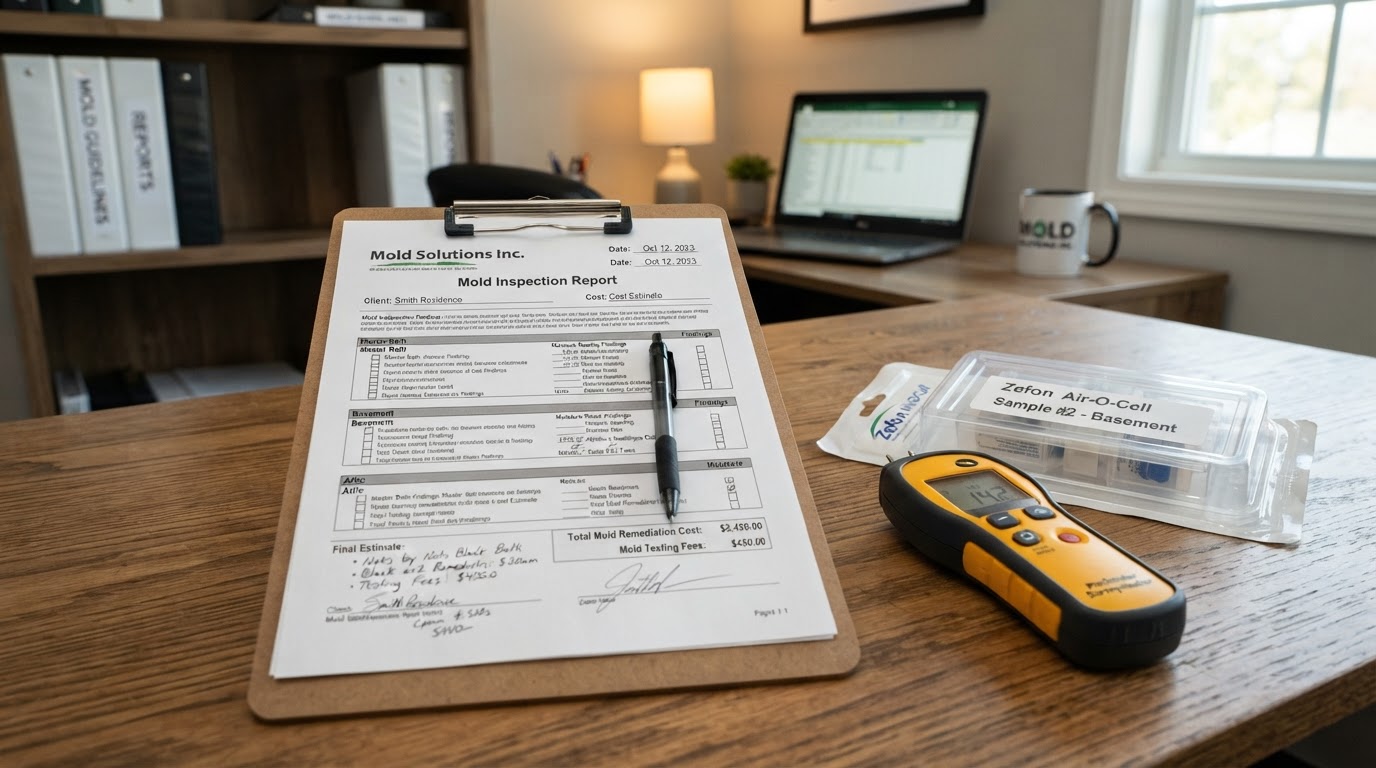
How Much Does Mold Testing Cost in Maryland?
Mold testing prices vary based on the scope of the inspection and the size of your home. Here is what influences the cost across Maryland and the DC region.
Testing & Inspection
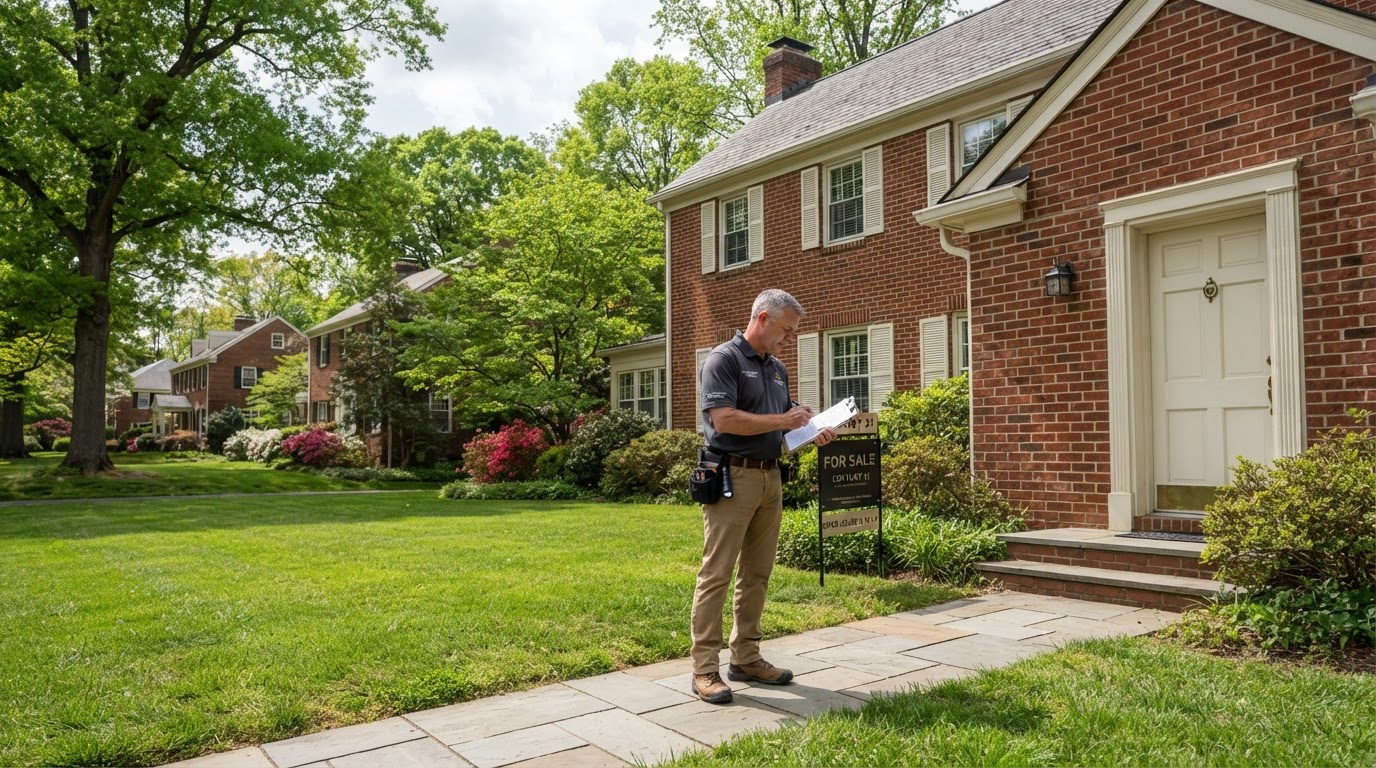
Buying a Home in Maryland? Why Mold Testing Matters
Before you close on a Maryland home, a mold inspection can reveal hidden moisture issues that a standard home inspection might miss.
Testing & Inspection
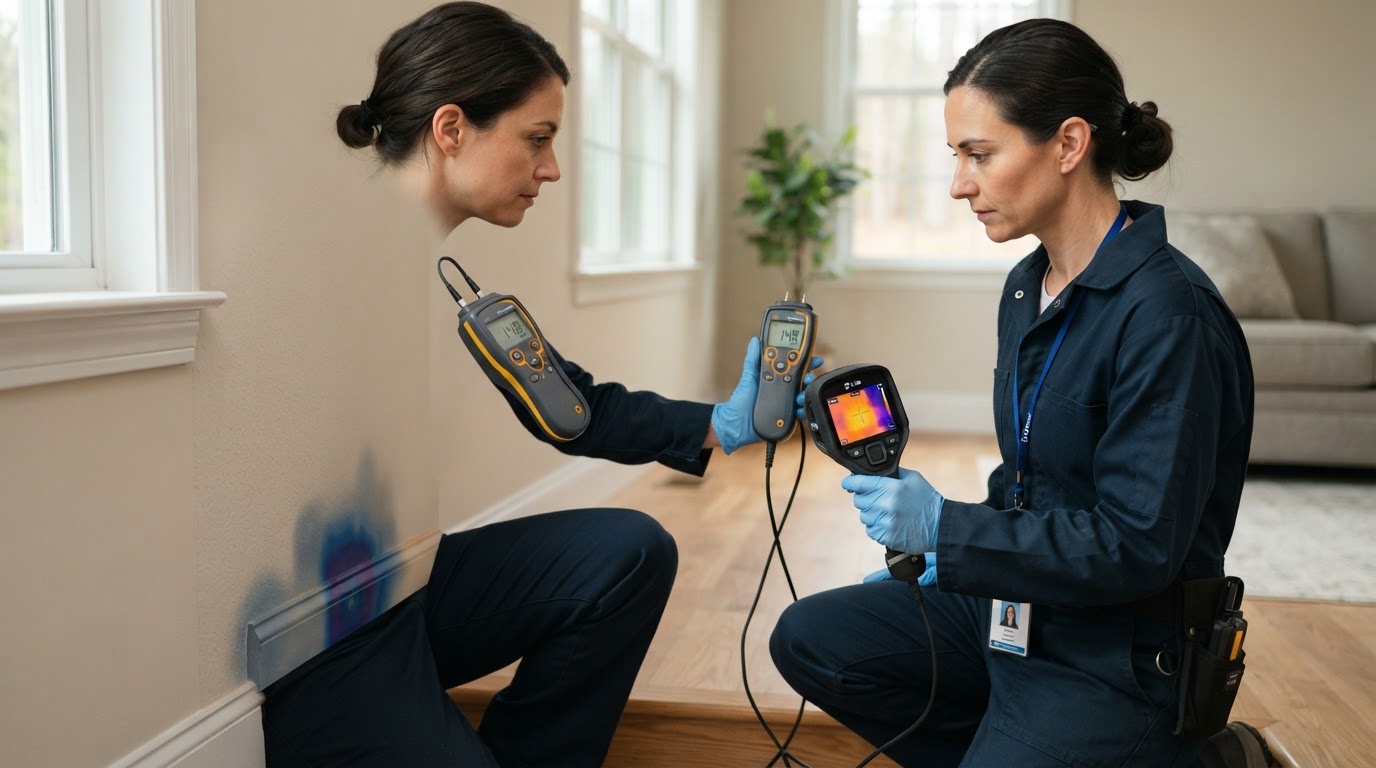
Understanding the Mold Inspection Process in Maryland
From the first phone call to the final report, here is what actually happens during a professional mold inspection in a Maryland home.


Service areas we cover
MD Mold Testing serves Baltimore, Rockville & Washington, D.C. and communities across Maryland, Washington D.C., Northern Virginia, and Delaware.
Not ready to schedule? Get our free guide.
Download The Ultimate Guide to a Mold-Free, Healthy Maryland Home and subscribe to the Maryland Healthy Home Newsletter for weekly homeowner tips.
MD Mold Testing
For professional pcm air quality testing in Baltimore, Rockville & Washington, D.C. and across Maryland, Washington D.C., Northern Virginia, and Delaware, our featured local provider is MD Mold Testing. Best Mold Testing Maryland is an independent educational resource — we do not perform inspections ourselves.