Licensed Microscopist Services in Maryland & the Greater D.C. Region
Professional microscopy services from a licensed microscopist — the lab-qualified analysis of mold spore traps, asbestos fibers (PCM/TEM), and biological samples that ensures accurate, defensible results.
What is licensed microscopist?
A licensed microscopist provides the laboratory analysis that underpins accurate environmental testing results. Microscopy — the examination of samples under a microscope to identify and count organisms or fibers — is the analytical foundation for mold spore-trap analysis, asbestos fiber counting (PCM and TEM), and biological sample identification. The accuracy and defensibility of environmental test results depend on the skill and qualifications of the microscopist who reads the samples. MD Mold Testing provides licensed microscopist services through accredited laboratories throughout Maryland, Washington D.C., Northern Virginia, and Delaware.
A licensed microscopist is a laboratory professional qualified to analyze environmental samples under a microscope — identifying and counting mold spores, asbestos fibers, and biological organisms. The service is the analytical step behind environmental testing: field samples (spore-trap cassettes for mold, PCM cassettes for airborne fibers, bulk samples for asbestos PLM, swabs and water samples for biological analysis) are sent to an accredited laboratory, where a microscopist prepares and examines them under the appropriate type of microscopy. For mold spore traps, that is light microscopy — the microscopist identifies the spore types present and counts them to determine concentration. For asbestos airborne fibers, it is phase contrast microscopy (PCM) for total fiber counting or transmission electron microscopy (TEM) for asbestos-specific identification. For asbestos bulk materials, it is polarized light microscopy (PLM). For biological samples, it may be culture and/or molecular methods (PCR). The microscopist's skill directly determines the accuracy of the results — identifying a Stachybotrys spore vs. a Cladosporium spore, distinguishing an asbestos fiber from a non-asbestos fiber, or counting accurately in defined fields of view requires training, experience, and the right equipment. The report includes the analyst's qualifications and the laboratory's accreditation, which is what makes the results defensible.
Why is licensed microscopist important?
The Mid-Atlantic region's older building stock and humid climate create a steady demand for environmental testing — mold, asbestos, and biological — and the laboratory analysis that supports it. A licensed microscopist ensures that the air and surface samples collected from Maryland and D.C. area homes are analyzed accurately and that the results are defensible for renovation plans, real estate transactions, insurance claims, and regulatory compliance in the region.
The accuracy of environmental testing results depends entirely on the skill of the microscopist who reads the samples. A spore-trap cassette collected perfectly in the field is only as good as the analysis that reads it — if the microscopist misidentifies a spore type or counts inaccurately, the report is wrong, and decisions based on it (whether to remediate, whether to proceed with a transaction, whether the air is clear) are wrong too. For asbestos, the stakes are higher: PCM fiber counting is the clearance method that determines whether a space is safe to reoccupy, and the count depends on the microscopist's ability to distinguish fibers from non-fibers and count them accurately in defined fields of view. TEM analysis — which identifies asbestos fibers specifically — requires even more specialized equipment and expertise. A licensed, qualified microscopist working in an accredited laboratory is the standard for results that will withstand scrutiny — by a regulator, an insurer, a court, or a property buyer. In the Mid-Atlantic, where environmental testing is a routine part of renovating older buildings, closing real estate transactions, and resolving insurance claims, the quality of the laboratory analysis is what makes the results worth having. A licensed microscopist is the professional who ensures that the answer on the report is the right answer.
Featured Local Provider
Schedule licensed microscopist with MD Mold Testing
Serving Rockville, Bethesda & Silver Spring, MD and the greater Mid-Atlantic region.
Warning signs to watch for
- You need defensible, lab-verified environmental test results
- A renovation, transaction, or insurance claim requires documented analysis
- You need accurate identification of mold spore types and counts
- Asbestos clearance requires PCM or TEM fiber analysis
- Biological samples need professional laboratory identification
When should you schedule this service?
- Environmental testing results need to be accurate and defensible
- A renovation or demolition requires asbestos clearance analysis
- A real estate transaction requires lab-verified mold or asbestos results
- An insurance claim needs documented environmental analysis
- Biological samples require professional laboratory identification
What does professional testing involve?
Here's how MD Mold Testing typically approaches licensed microscopist across Rockville, Bethesda & Silver Spring, MD.
Sample receipt
Samples collected in the field (spore-trap cassettes, PCM cassettes, bulk samples, swabs) are received at the laboratory under chain-of-custody.
Sample preparation
Samples are prepared for analysis — spore traps mounted on slides, PCM cassettes cleared and mounted, bulk samples prepared for PLM, biological samples cultured or prepared for molecular analysis.
Microscopic analysis
A licensed microscopist examines the prepared samples under the appropriate microscope — light microscopy for spore traps and PCM, PLM for asbestos bulk, TEM for asbestos-specific fiber ID — and identifies and counts the organisms or fibers.
Analytical report
A lab-verified report presents the findings — spore types and counts, fiber concentrations, organism identification — with the analyst's qualifications and the lab's accreditation.
Licensed microscopist services provide the laboratory analysis behind environmental testing results. Samples are prepared and examined under the appropriate microscope, organisms or fibers are identified and counted, and a lab-verified report presents the findings. Call MD Mold Testing at (301) 717-1454.
Licensed microscopist analysis is appropriate whenever environmental test results need to be accurate and defensible — for renovation plans, real estate transactions, insurance claims, regulatory compliance, and whenever the identification and quantification of mold spores, asbestos fibers, or biological organisms matters.
What can testing results tell you?
The microscopist's analytical report presents the findings in a lab-verified format. For mold spore traps: the spore types identified, their counts, and calculated concentrations (spores per cubic meter), compared to the outdoor baseline. For PCM: the fiber count per field of view and the calculated concentration (fibers per cubic centimeter), compared to the clearance criterion. For PLM: the presence or absence of asbestos in the bulk material, the type(s) identified, and the percentage. For TEM: the asbestos-specific fiber identification and count. For biological samples: the organisms identified (by culture or molecular methods) and their concentrations. The report includes the analyst's qualifications and the laboratory's accreditation (such as AIHA-LAP or a similar accreditation), which is what makes the results defensible. Results are laboratory analysis of environmental samples, not a medical assessment.
Featured Local Provider
Schedule licensed microscopist with MD Mold Testing
Serving Rockville, Bethesda & Silver Spring, MD and the greater Mid-Atlantic region.
The cost of microscopist services is typically included in the per-sample lab analysis fee for the relevant test (spore-trap analysis, PCM, PLM, TEM, or biological culture). TEM analysis is more expensive than PCM or spore-trap analysis due to the specialized equipment and time required. Contact MD Mold Testing at (301) 717-1454 for pricing based on your testing needs.
A common mistake is focusing on the field sampling and overlooking the laboratory analysis — the sample is only as good as the analysis that reads it, and an unaccredited lab or an unqualified analyst undermines the defensibility of the results. Another is confusing PCM (which counts all fibers) with TEM (which identifies asbestos specifically) and not specifying the right method for the question. A third is assuming all mold spore-trap analysis is the same; identification of specific spore types (Stachybotrys, Chaetomium, Aspergillus/Penicillium) requires a skilled microscopist, and the accuracy of the identification directly affects the usefulness of the report.
Microscopist services are inherently professional — they require a microscope, sample preparation equipment, and a trained, licensed analyst working in an accredited laboratory. There is no consumer equivalent. The value of a licensed microscopist is the accuracy and defensibility of the results, which is the foundation for any environmental testing decision. For results that will withstand scrutiny — by a regulator, an insurer, a buyer, or a court — accredited laboratory analysis by a licensed microscopist is the only reliable path.
Why licensed microscopist matters in the Mid-Atlantic
The region's older building stock creates steady demand for asbestos (PCM/TEM) and mold spore-trap analysis.
Lab-verified results are essential for renovation plans, transactions, and insurance claims common in the active Maryland and D.C. real estate market.
Accredited laboratory analysis ensures results are defensible for regulatory compliance in the region.
A local, independent testing specialist
MD Mold Testing is our featured local provider for licensed microscopist services across Maryland, Washington D.C., Northern Virginia, and Delaware. They work with accredited laboratories for mold spore-trap analysis, asbestos PCM/PLM/TEM analysis, and biological sample identification, ensuring the results behind every environmental test are accurate and defensible. Contact MD Mold Testing at (301) 717-1454 or visit https://www.mdmoldtesting.com/ to learn more about their laboratory analysis services.
Frequently asked questions about licensed microscopist
What does a licensed microscopist do?+
A licensed microscopist analyzes environmental samples under a microscope — identifying and counting mold spores, asbestos fibers, and biological organisms. Their skill directly determines the accuracy and defensibility of environmental test results.
Why does the microscopist's qualification matter?+
The accuracy of environmental results depends on the microscopist who reads the samples. Misidentification or inaccurate counting produces wrong results, and decisions based on them — remediation, transactions, clearance — are wrong too. An accredited, licensed microscopist ensures results are defensible.
What types of microscopy are used?+
Light microscopy for mold spore traps, phase contrast microscopy (PCM) for airborne fiber counting, polarized light microscopy (PLM) for asbestos bulk materials, transmission electron microscopy (TEM) for asbestos-specific fiber identification, and culture/molecular methods for biological samples.
What is the difference between PCM and TEM?+
PCM counts all airborne fibers rapidly — it is the standard clearance tool. TEM identifies asbestos fibers specifically at much higher magnification — it is used when asbestos-specific identification is required.
How much does microscopist analysis cost?+
The cost is typically the per-sample lab analysis fee for the relevant test (spore-trap, PCM, PLM, TEM, or biological culture). TEM is more expensive than PCM due to the specialized equipment. Contact MD Mold Testing at (301) 717-1454 for pricing.
Are the results defensible for a real estate transaction or insurance claim?+
Yes. Accredited laboratory analysis by a licensed microscopist produces lab-verified results with the analyst's qualifications and the lab's accreditation documented. That is what makes them defensible for transactions, claims, and regulatory compliance.
Related questions from our knowledge base
What exactly is mold?
Mold is a type of fungus that grows from microscopic spores present in virtually all indoor and outdoor air. When spores land on a surface w
Read full answerHow does mold grow inside a home?
Mold needs three things to grow: moisture, a food source, and a suitable temperature. Indoors, moisture comes from leaks, condensation, high
Read full answerIs all mold dangerous?
Not all mold is dangerous to everyone, but no mold should be allowed to grow indoors. The CDC and EPA emphasize that the type of mold matter
Read full answerWhat types of mold are common in Maryland homes?
Common indoor molds include Aspergillus, Penicillium, Cladosporium, and Stachybotrys (often called 'black mold'). In Maryland's humid climat
Read full answerWhat is the difference between mold and mildew?
Mildew is actually a type of mold that typically grows flat on surfaces, often in bathrooms or on damp fabrics, and is usually white, gray,
Read full answerWill mold go away on its own?
Mold will not go away on its own as long as the moisture source remains. If you dry out a damp area, visible mold may stop actively growing,
Read full answerFeatured Local Provider
Schedule licensed microscopist with MD Mold Testing
Serving Rockville, Bethesda & Silver Spring, MD and the greater Mid-Atlantic region.
Related educational articles

Cost & Timing
How Much Does Mold Testing Cost in Maryland?
Mold testing prices vary based on the scope of the inspection and the size of your home. Here is what influences the cost across Maryland and the DC region.
Moisture & Humidity
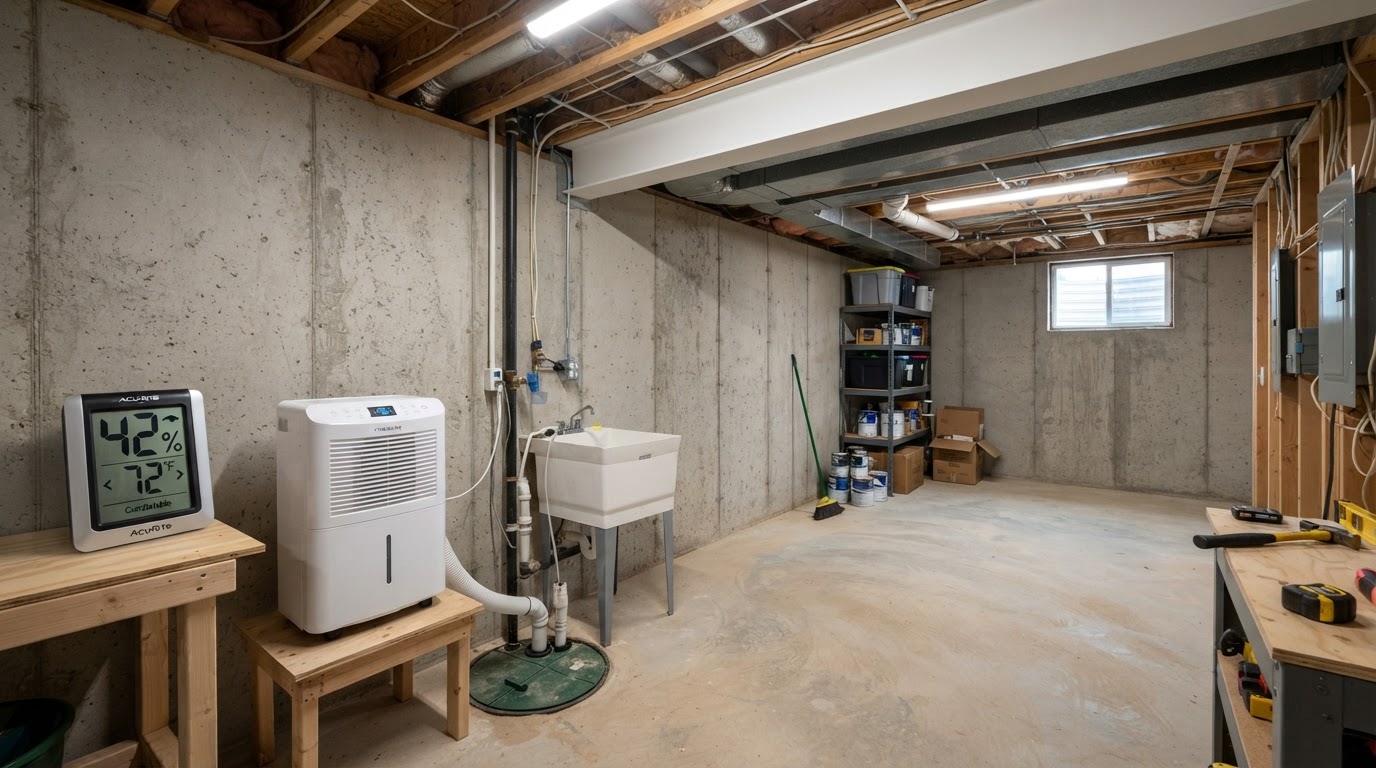
How to Prevent Mold in Maryland Basements
Basements are the most mold-prone room in a Mid-Atlantic home. Here is how to keep yours dry, ventilated, and mold-free year-round.
Testing & Inspection
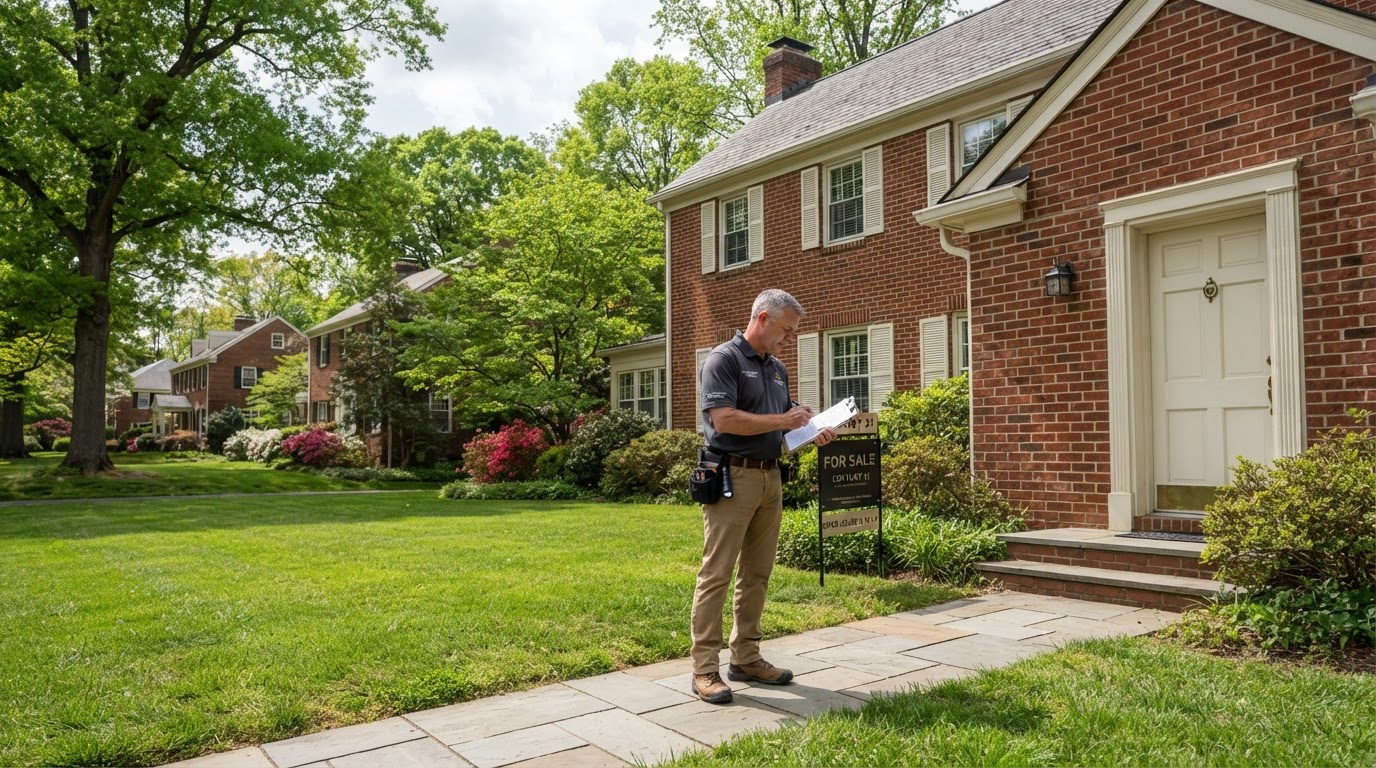
Buying a Home in Maryland? Why Mold Testing Matters
Before you close on a Maryland home, a mold inspection can reveal hidden moisture issues that a standard home inspection might miss.


Service areas we cover
MD Mold Testing serves Rockville, Bethesda & Silver Spring, MD and communities across Maryland, Washington D.C., Northern Virginia, and Delaware.
Not ready to schedule? Get our free guide.
Download The Ultimate Guide to a Mold-Free, Healthy Maryland Home and subscribe to the Maryland Healthy Home Newsletter for weekly homeowner tips.
MD Mold Testing
For professional licensed microscopist in Rockville, Bethesda & Silver Spring, MD and across Maryland, Washington D.C., Northern Virginia, and Delaware, our featured local provider is MD Mold Testing. Best Mold Testing Maryland is an independent educational resource — we do not perform inspections ourselves.