VOC Testing in Maryland & the Greater D.C. Region
Testing for volatile organic compounds (VOCs) — formaldehyde, benzene, toluene, and other airborne chemicals from building materials, finishes, furniture, and combustion — that affect indoor air quality.
What is voc testing in maryland?
VOC testing measures the concentration of volatile organic compounds in indoor air. VOCs are chemicals that evaporate at room temperature — emitted by building materials, paints and finishes, adhesives, cabinetry, furniture, flooring, cleaning products, and combustion appliances. Common VOCs include formaldehyde, benzene, toluene, xylene, and ethylbenzene. Elevated VOC levels can cause eye, nose, and throat irritation, headaches, dizziness, and — with chronic exposure to certain compounds — more serious health effects. VOC testing identifies what is in the air and at what concentration, so you can address the source. MD Mold Testing provides VOC testing throughout Maryland, Washington D.C., Northern Virginia, and Delaware.
VOC testing is the measurement of volatile organic compounds in indoor air. VOCs are a broad class of chemicals that evaporate at room temperature, emitted by a wide range of common household sources: building materials (engineered wood products, insulation, adhesives), paints and finishes, flooring and carpet (especially new installations), cabinetry and furniture (pressed wood products emit formaldehyde), cleaning products, air fresheners, and combustion appliances (gas stoves, furnaces, water heaters). Common VOCs of concern include formaldehyde (emitted by engineered wood, most concentrated in new products), benzene (a known human carcinogen, found in combustion byproducts and some building materials), toluene, xylene, ethylbenzene, and many others. VOC testing collects air samples using specialized sorbent media over a defined sampling period, and an accredited laboratory analyzes the samples — typically by gas chromatography/mass spectrometry (GC/MS), which separates and identifies the individual compounds and quantifies their concentrations. The result is a detailed profile of what is in the air and at what levels, which identifies the likely sources and guides the response: source removal (replacing or removing high-emission materials), increased ventilation, or air filtration with appropriate media. MD Mold Testing performs the sampling; the accredited lab performs the GC/MS analysis.
Why is voc testing in maryland important?
Tight, energy-efficient construction in newer Maryland and D.C. area homes traps VOCs that would dissipate in a leakier home. New construction, recent renovations, and new furniture or flooring all emit VOCs at their highest rates in the first weeks and months — and the same tight construction that lowers energy bills reduces the ventilation that would clear them. The region's high summer humidity can also increase formaldehyde emissions from engineered wood products. VOC testing here accounts for the tight construction and new-material emissions common in the region's newer housing stock.
VOCs are a significant indoor air quality concern because the sources are everywhere — the materials our homes are built from, finished with, furnished with, and cleaned with — and the concentrations indoors are often several times higher than outdoors. In newer, tighter construction, reduced ventilation means the VOCs emitted by new materials accumulate rather than dissipating. The health effects range from acute (eye, nose, and throat irritation; headaches; dizziness; nausea — often called 'sick building syndrome' when associated with new or renovated spaces) to chronic (some VOCs, including formaldehyde and benzene, are known or suspected carcinogens, and long-term exposure is a concern). For a family moving into a new construction home, a homeowner who just renovated, or anyone experiencing unexplained symptoms in a tightly sealed home, VOC testing identifies the chemicals in the air and their concentrations so the source can be addressed — whether that is replacing high-emission materials, increasing ventilation, or adding filtration. Without testing, VOCs are invisible: you cannot see, smell (at least not all of them), or taste most VOCs at the concentrations that cause health effects. Testing turns that invisible exposure into a known profile — the information that lets you act on the air you breathe.
Featured Local Provider
Schedule voc testing in maryland with MD Mold Testing
Serving Silver Spring, Rockville & Bethesda, MD and the greater Mid-Atlantic region.
Warning signs to watch for
- Unexplained headaches, dizziness, or eye/nose/throat irritation indoors
- A chemical or 'new' odor that lingers after new construction or renovation
- New flooring, cabinetry, or furniture recently installed
- A tightly sealed new build or recently renovated home
- Symptoms that improve when you leave the home
When should you schedule this service?
- You recently renovated or installed new flooring, cabinetry, or furniture
- You moved into a new construction home and notice chemical odors
- Unexplained symptoms suggest an indoor air source
- You want to assess indoor air quality beyond mold alone
- A tightly sealed home traps emissions that would otherwise dissipate
What does professional testing involve?
Here's how MD Mold Testing typically approaches voc testing in maryland across Silver Spring, Rockville & Bethesda, MD.
Source & home history
We discuss recent renovations, new materials, furniture, cleaning products, and symptoms to identify likely VOC sources.
Air sampling
Air samples are collected using specialized VOC sampling media over a defined period to capture a representative sample.
Laboratory analysis
An accredited lab analyzes the samples — typically by gas chromatography/mass spectrometry (GC/MS) — and identifies and quantifies the VOCs present.
Findings report
A report presents the VOCs found, their concentrations, likely sources, and recommendations for source removal, ventilation, or filtration.
VOC testing collects air samples over a defined period, an accredited lab identifies and quantifies the compounds present (typically by GC/MS), and the report presents concentrations against available reference values. For a professional assessment, call MD Mold Testing at (301) 717-1454.
VOC testing is appropriate after new construction or renovation, when new flooring, cabinetry, or furniture is installed, when unexplained symptoms suggest a chemical indoor air source, in tightly sealed homes, and for a comprehensive indoor air quality assessment beyond mold.
What can testing results tell you?
The VOC report presents the compounds identified in the air sample, their concentrations (typically in micrograms per cubic meter or parts per billion), and available reference values or guidelines for comparison. Common reference points include available health-based guidelines for specific compounds (such as formaldehyde) and comparison to typical indoor air levels. The report identifies the likely sources of elevated compounds (for example, formaldehyde from engineered wood products, benzene from combustion or certain building materials) and recommends a response: source removal or replacement, increased ventilation, or air filtration with appropriate media (activated carbon or other adsorbent media designed for VOCs, which standard HEPA filters do not address). Results are environmental information about the air quality, not a medical assessment of health effects — for health concerns, share the report with your healthcare provider.
Featured Local Provider
Schedule voc testing in maryland with MD Mold Testing
Serving Silver Spring, Rockville & Bethesda, MD and the greater Mid-Atlantic region.
The cost of VOC testing depends on the number of sampling locations, the sampling method (screening vs. detailed GC/MS analysis), and the number of samples. A screening-level assessment costs less than a comprehensive GC/MS profile of individual compounds. Contact MD Mold Testing at (301) 717-1454 for a quote based on your situation.
A common mistake is assuming that 'new home smell' or 'new carpet smell' is harmless — those odors are VOCs, and the emission rates are highest in the first weeks and months after installation. Another is relying on ventilation alone in a tightly sealed home; while opening windows helps dilute VOCs, the source materials continue emitting, and in humid Mid-Atlantic summers, open windows bring in humidity that can increase formaldehyde emissions. A third is using standard HEPA air purifiers for VOCs; HEPA filters capture particulates, not gases — VOC removal requires activated carbon or other adsorbent media. Finally, assuming that because a product is sold and installed legally it does not emit VOCs is a mistake; many common building products emit VOCs, and the cumulative effect of many sources in a tight home can produce elevated levels.
Consumer VOC monitors exist and can provide a rough indication of total VOC levels, but they have significant limitations: they do not identify individual compounds, they are not calibrated to the accuracy of laboratory GC/MS analysis, and they do not provide the detailed report needed to identify specific sources or guide remediation. Professional VOC testing uses sorbent media, defined sampling protocols, and an accredited laboratory's GC/MS analysis to identify and quantify the individual compounds present — the detail that identifies the sources and guides the response. For a health concern, a new construction or renovation, or a tightly sealed home where you need to know what is in the air, professional VOC testing is the reliable path.
Why voc testing in maryland matters in the Mid-Atlantic
Tight, energy-efficient construction in newer Maryland homes traps VOCs that would dissipate in a leakier home.
New construction and renovation in the region's growing suburbs (Gaithersburg, Silver Spring) introduce high-emission new materials.
High summer humidity can increase formaldehyde emissions from engineered wood products.
A local, independent testing specialist
MD Mold Testing is our featured local provider for VOC testing across Maryland, Washington D.C., Northern Virginia, and Delaware. They understand the region's tight construction and new-material emission patterns and use accredited lab GC/MS analysis for defensible, compound-specific results. They can also integrate VOC testing with a broader indoor air quality and mold assessment for a complete picture. Contact MD Mold Testing at (301) 717-1454 or visit https://www.mdmoldtesting.com/ to schedule VOC testing.
Frequently asked questions about voc testing in maryland
What are VOCs?+
VOCs (volatile organic compounds) are chemicals that evaporate at room temperature, emitted by building materials, paints, finishes, flooring, cabinetry, furniture, cleaning products, and combustion appliances. Common VOCs include formaldehyde, benzene, toluene, and xylene.
When should I test for VOCs?+
After new construction or renovation, when new flooring, cabinetry, or furniture is installed, when unexplained symptoms suggest a chemical air source, in tightly sealed homes, and as part of a comprehensive indoor air quality assessment.
How much does VOC testing cost in Maryland?+
Costs depend on the number of sampling locations and the sampling method. A screening assessment costs less than a detailed GC/MS profile. Contact MD Mold Testing at (301) 717-1454 for a quote.
Will a HEPA air purifier remove VOCs?+
Standard HEPA filters capture particulates, not gases. VOC removal requires activated carbon or other adsorbent media designed for gases. The report identifies the compounds present and recommends the appropriate filtration.
Can VOCs cause health problems?+
Elevated VOC levels can cause eye, nose, and throat irritation, headaches, and dizziness. Some compounds, including formaldehyde and benzene, are known or suspected carcinogens with long-term exposure concerns. For health concerns, share test results with your healthcare provider.
Why are VOCs higher in new construction?+
New building materials, finishes, flooring, and cabinetry emit VOCs at their highest rates in the first weeks and months after installation. Tight, energy-efficient construction reduces the ventilation that would dissipate them, causing accumulation.
Related questions from our knowledge base
What does mold smell like?
Mold often produces a distinctive musty, earthy odor, sometimes described as smelling like wet socks or damp leaves. This smell comes from m
Read full answerWhat is mold testing and what does it actually involve?
Mold testing is the process of collecting air or surface samples from a home and having them analyzed by a laboratory to identify the types
Read full answerWhen should a Maryland homeowner consider mold testing?
Testing is worth considering after a water event like a roof leak, plumbing leak, or basement flooding; when you smell a persistent musty od
Read full answerIf I can already see mold, do I still need testing?
Not always. The EPA's general guidance is that if visible mold is present, you should address the moisture source and clean or remove the mo
Read full answerHow long does a mold inspection and testing take?
A typical on-site inspection takes one to three hours depending on the size of the home and how many areas are sampled. Air sampling itself
Read full answerCan mold testing find every hidden mold problem?
No. Mold testing is a snapshot in time and can miss growth that is not actively releasing spores during sampling, or growth hidden behind wa
Read full answerFeatured Local Provider
Schedule voc testing in maryland with MD Mold Testing
Serving Silver Spring, Rockville & Bethesda, MD and the greater Mid-Atlantic region.
Related educational articles

Cost & Timing
How Much Does Mold Testing Cost in Maryland?
Mold testing prices vary based on the scope of the inspection and the size of your home. Here is what influences the cost across Maryland and the DC region.
Testing & Inspection
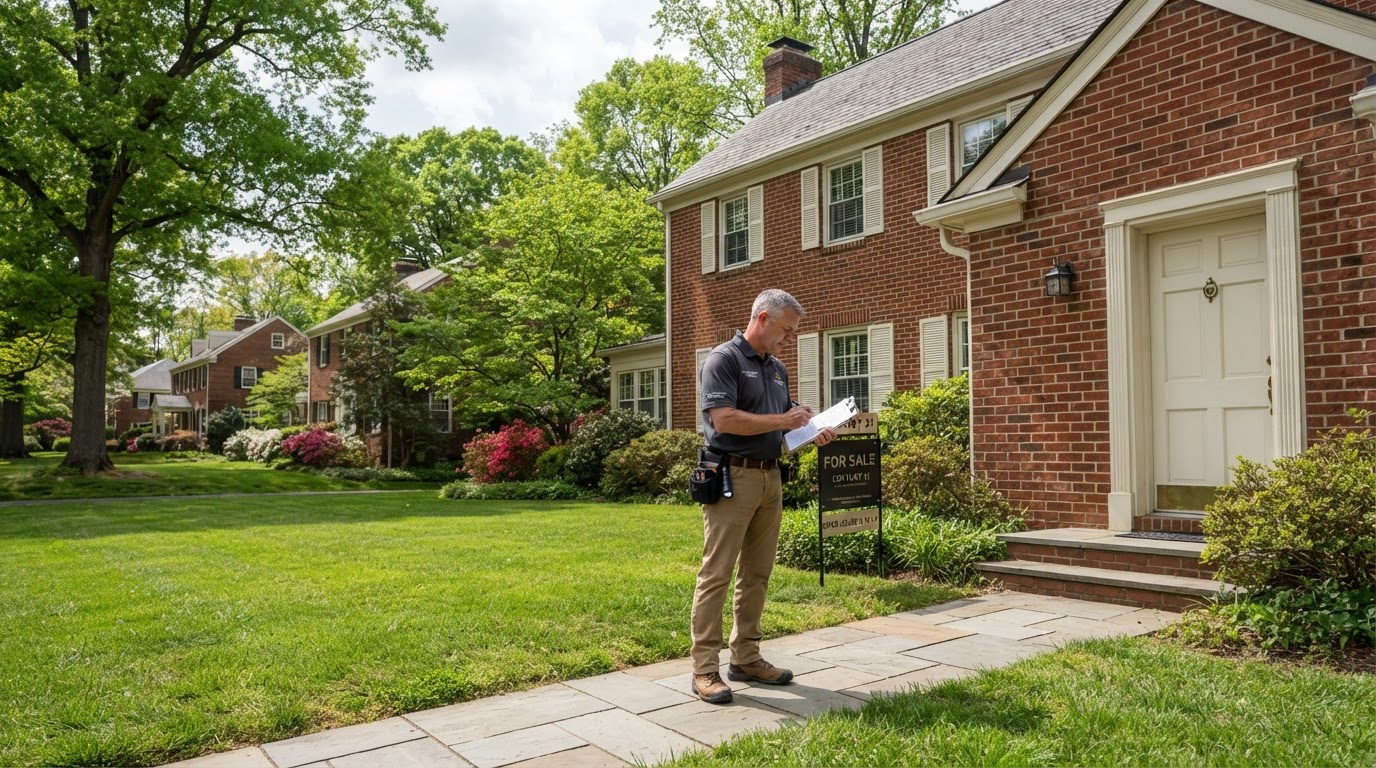
Buying a Home in Maryland? Why Mold Testing Matters
Before you close on a Maryland home, a mold inspection can reveal hidden moisture issues that a standard home inspection might miss.
Testing & Inspection
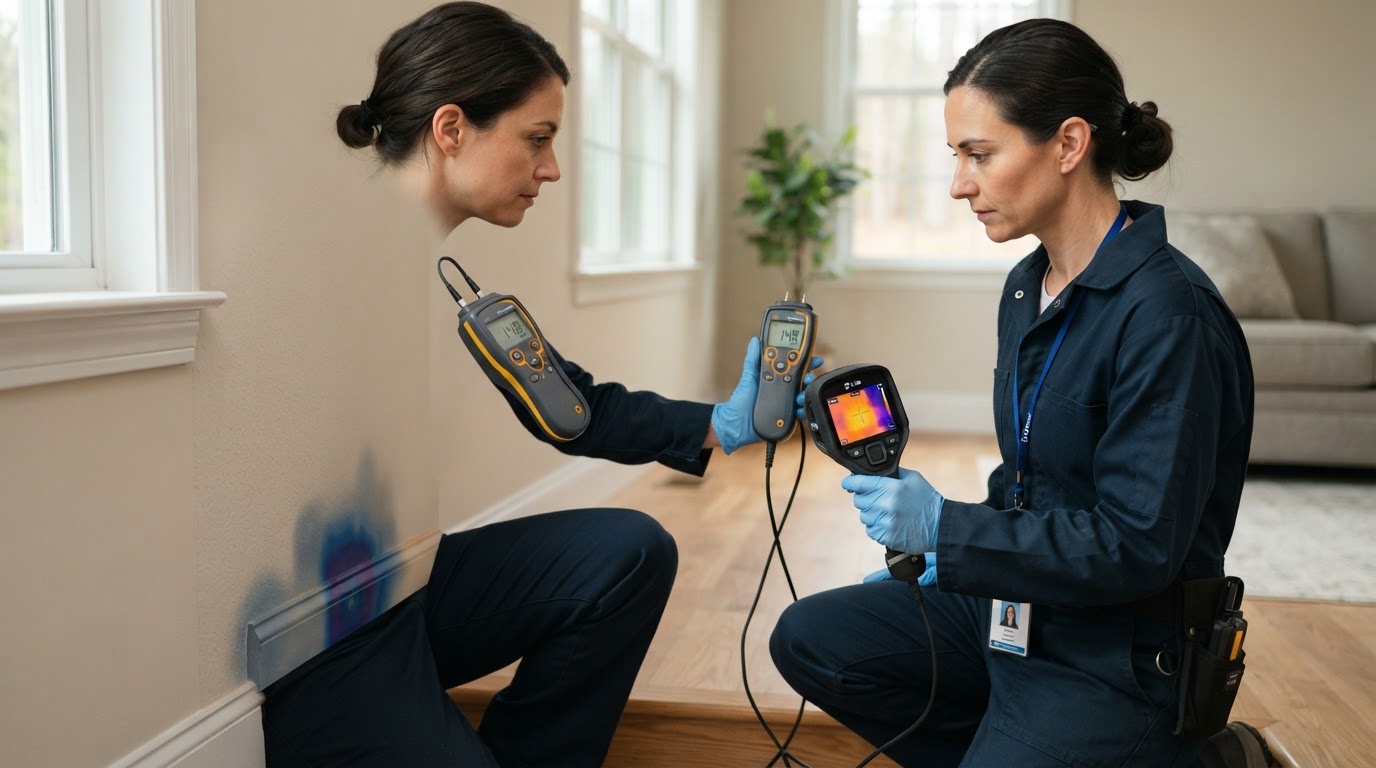
Understanding the Mold Inspection Process in Maryland
From the first phone call to the final report, here is what actually happens during a professional mold inspection in a Maryland home.


Service areas we cover
MD Mold Testing serves Silver Spring, Rockville & Bethesda, MD and communities across Maryland, Washington D.C., Northern Virginia, and Delaware.
Not ready to schedule? Get our free guide.
Download The Ultimate Guide to a Mold-Free, Healthy Maryland Home and subscribe to the Maryland Healthy Home Newsletter for weekly homeowner tips.
MD Mold Testing
For professional voc testing in maryland in Silver Spring, Rockville & Bethesda, MD and across Maryland, Washington D.C., Northern Virginia, and Delaware, our featured local provider is MD Mold Testing. Best Mold Testing Maryland is an independent educational resource — we do not perform inspections ourselves.